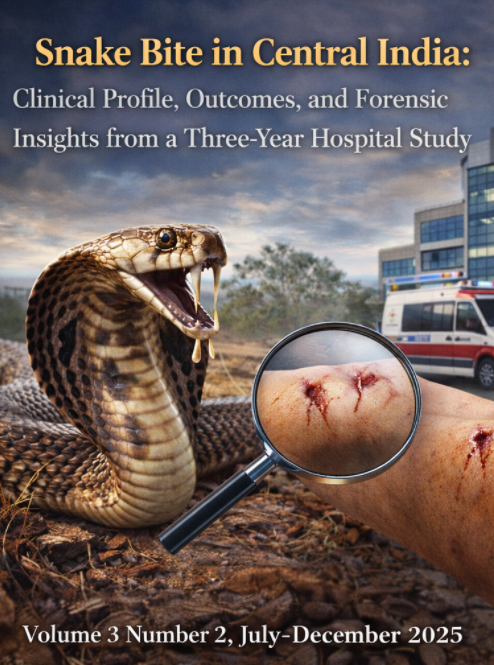
Original Research: Snake bite in Central India: Clinical Profile, Outcomes, and Forensic Insights from a Three-Year Hospital Study
DOI:
https://doi.org/10.5281/%20zenodo.17993116Keywords:
Snakebite; Epidemiology; Anti-Snake Venom (ASV); Envenomation; Forensic Medicine; Central IndiaAbstract
Abstract
Snake bite is one of the major medico-public health problems in India, especially among rural and agricultural populations. This retrospective hospital-based study was conducted to analyze
the demographic, clinical, and therapeutic aspects of snake bite cases reported between 2022 and 2025 at a tertiary care hospital in Central India. Data from a total of 674 cases were collected from OPD and IPD registers and analyzed for parameters including age, gender, time and site of bite, snake identification, clinical signs and symptoms, ASV administration, and patient outcome. Most victims were males (55.5%) belonging to the 16–65 years age group (81%). The majority of bites occurred on lower limbs (64.5%), and peak incidence was noted during evening hours (28%). Non-venomous bites were most common (66.6%), followed by hemotoxic (12.3%) and neurotoxic (11.4%) types. ASV was administered in 62.9% of cases. Overall mortality was 7.4%, mainly among patients presenting late or with neurotoxic features. The study concludes that snake bite remains a preventable cause of morbidity and mortality. Early hospital management, awareness regarding first aid, and timely administration of anti-snake venom can significantly reduce fatal outcomes in Central India.
Downloads
Published
How to Cite
Issue
Section
License
Copyright (c) 2025 All content published in IJMJ is made available under the Creative Commons Attribution 4.0 International License (CC BY 4.0).

This work is licensed under a Creative Commons Attribution-NonCommercial 4.0 International License.
Copyright Policy Summary – International Journal of Medical Justice (IJMJ):
IJMJ is an open access journal. All articles are published under the Creative Commons Attribution 4.0 International License (CC BY 4.0). This allows others to freely access, share, reproduce, and create derivative works, provided proper credit is given to the original authors. Authors retain full ownership of their work.