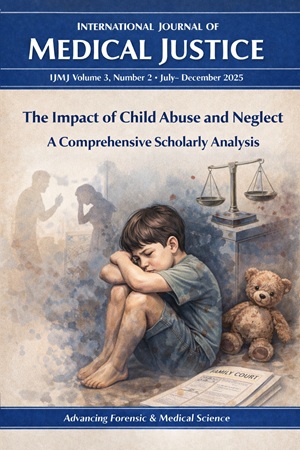
Review Article: The Impact of Child Abuse and Neglect: A Comprehensive Scholarly Analysis
DOI:
https://doi.org/10.5281/zenodo.17993656Keywords:
Art of parenting, Parental child abuse, Right pathAbstract
Objective: This analysis aims to provide a comprehensive scholarly overview of child abuse and neglect (CAN) by delineating its definitions, global prevalence, etiological factors, multifaceted consequences, and essential prevention and intervention strategies.
Methods: A narrative review and synthesis of current literature, including global epidemiological reports (e.g., WHO), seminal studies (e.g., the Adverse Childhood Experiences (ACE) Study), and meta-analyses on the etiology and outcomes of child maltreatment.
Results:
- Definitions & Prevalence:CAN is classified into physical, sexual, and psychological abuse, and neglect. It is a global epidemic, with an estimated 1 billion children affected and significant prevalence disparities across regions.
- Etiology:Risk factors operate within an ecological framework, including individual (e.g., parental history of ACEs), relational (e.g., family violence), and societal levels (e.g., cultural norms supporting violence).
- Consequences:CAN leads to profound, lifelong impacts. These include long-term physical health disease (e.g., heart disease, cancer), psychological disorders (e.g., depression, PTSD), behavioral problems, and neurobiological alterations in brain development.
- Prevention: Effective strategy requires a multi-tiered public health approach: primary (universal awareness, parenting education), secondary (targeted support for at-risk families), and tertiary prevention (trauma-focused therapy to mitigate harm).
Conclusion: Child abuse and neglect inflict severe, long-lasting damage on individuals and societies. Addressing this complex crisis necessitates a concerted, multi-sectoral effort grounded in evidence-based prevention, early identification, and trauma-informed intervention to break the intergenerational cycle of violence and promote child well-being globally.
Downloads
Published
How to Cite
Issue
Section
License
Copyright (c) 2025 All content published in IJMJ is made available under the Creative Commons Attribution 4.0 International License (CC BY 4.0).

This work is licensed under a Creative Commons Attribution-NonCommercial 4.0 International License.
Copyright Policy Summary – International Journal of Medical Justice (IJMJ):
IJMJ is an open access journal. All articles are published under the Creative Commons Attribution 4.0 International License (CC BY 4.0). This allows others to freely access, share, reproduce, and create derivative works, provided proper credit is given to the original authors. Authors retain full ownership of their work.